Global Wheat Market Forecast 2025–2030: Price Trends & Trade Outlook
Introduction
Wheat remains one of the world’s most critical staples, feeding billions across continents. But in the next five years — from 2025 to 2030 — the global wheat market is poised at a crossroads. Pressure from climate volatility, geopolitical risks, and shifting demand patterns could reshape pricing, trade flows, and competitive advantages. For traders, importers, and intermediaries, having a clear outlook is no longer optional — it’s essential for strategic positioning.
Current Market Snapshot & Recent Trends
- According to FAO’s Cereal Supply and Demand Brief, global trade in wheat (Jul/Jun) is forecast to grow by 4.9% in the 2025/26 cycle, reaching ~202.1 million tonnes.
- The OECD-FAO Agricultural Outlook 2025-2034 projects that global wheat consumption for food will rise by 57 million tons over the coming decade, with India and China contributing about 30% of that growth.
- In the U.S. market, export volumes are expected to rebound significantly: U.S. wheat exports in 2025/26 are forecasted to increase to 850 million bushels, the highest since 2020/21.
- Meanwhile, global production forecasts are mixed: IGC has trimmed global wheat production estimates slightly, expecting ~806 million MT for 2025/26, modestly above previous year.
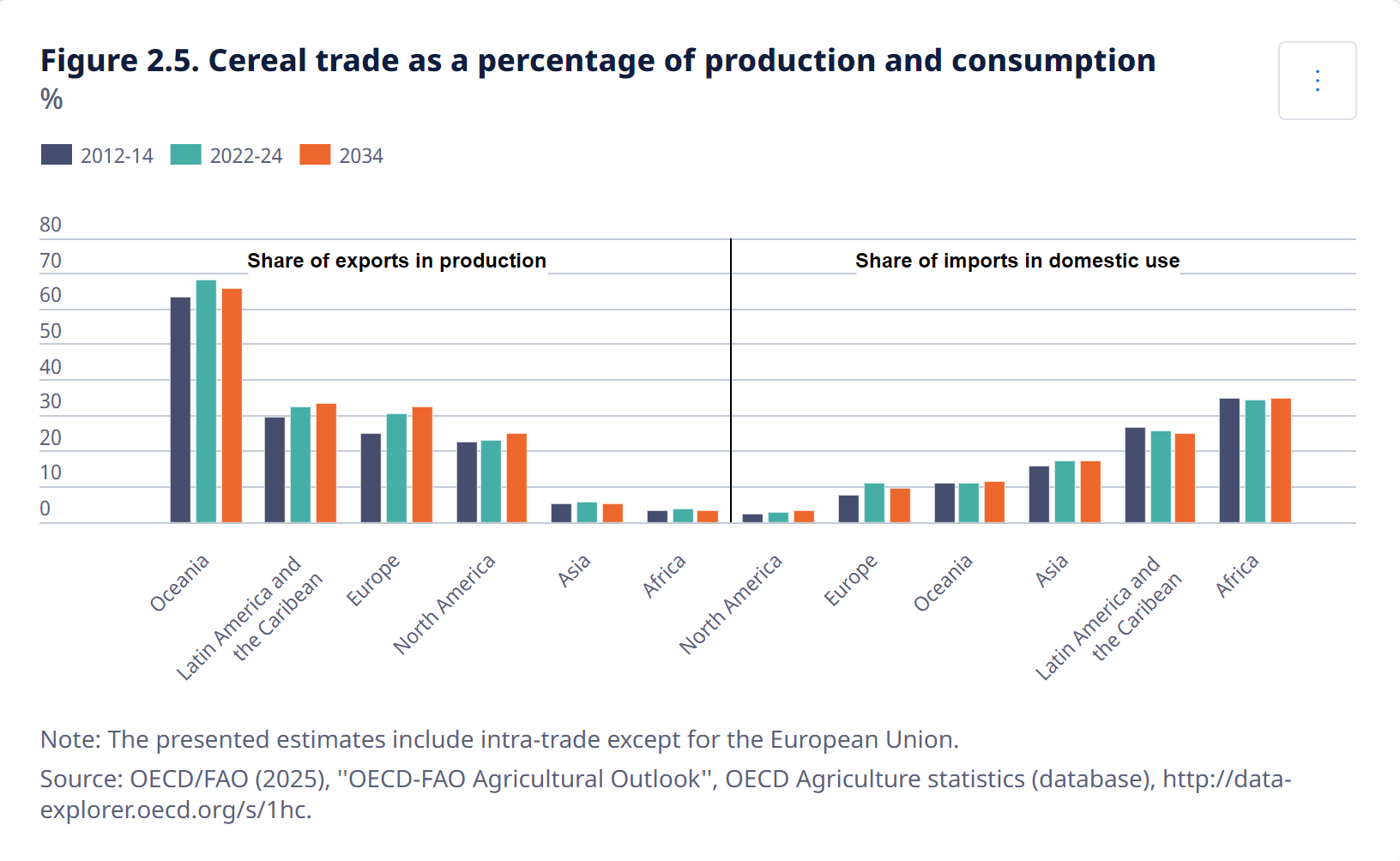
These trends suggest that although supply is stable or slightly growing, demand pressures are mounting — which could lead to tighter balances, especially during weather or geopolitical disruptions.
Price Forecast (2025–2030)
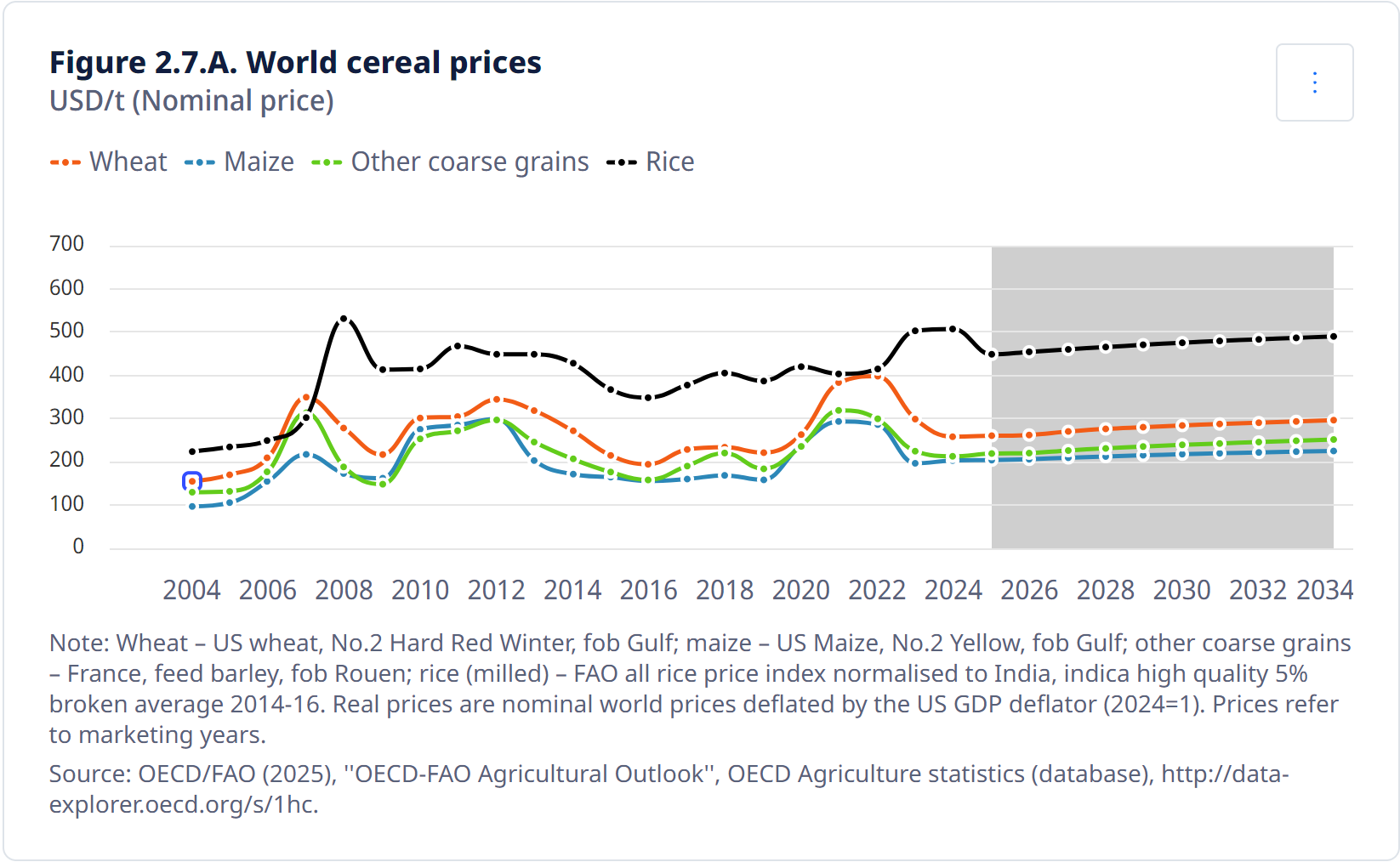
Below is a forecast summary based on analyst consensus, and market model projections. (Insert a real chart here from your data provider.)
Forecast Highlights:
- Many analysts expect moderate upward pressure on prices, barring major supply shocks, especially in late 2025 into 2026.
- A Fitch Solutions outlook has revised down its U.S. wheat price forecast from ~58.5¢/bu to ~56.8¢/bu (i.e. more cautious given expected abundant supplies).
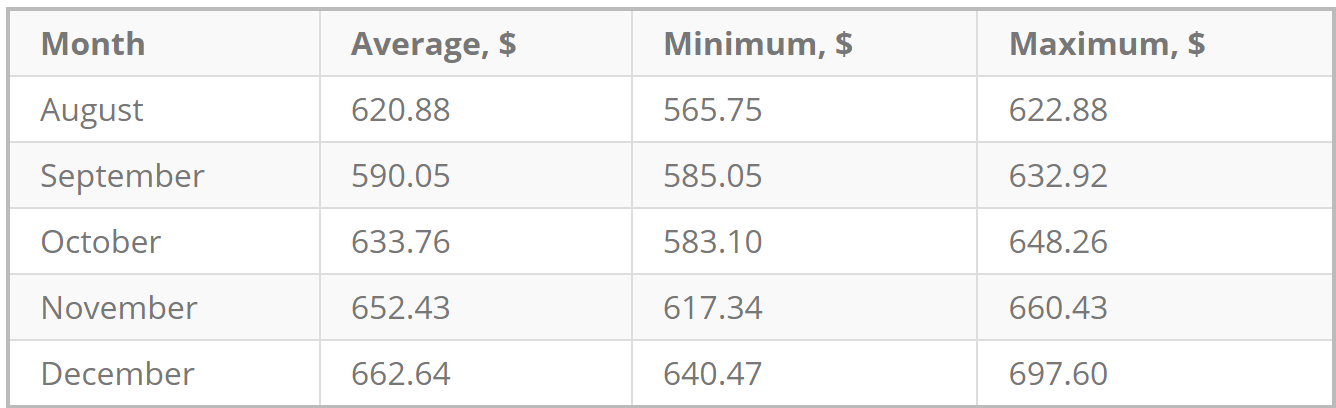
- Some forecasts place 2025 futures in a band between US$565–US$700/MT depending on origin, weather, and freight influences.
- In 2025, the U.S. average projected price hovers around $5.50/bu (versus $5.55 in 2024) in USDA outlooks.
- However, several sources warn that abundant production in Europe, Russia, and other major regions could constrain upward price runs.
- Adverse weather events (droughts, floods, heatwaves) in major exporting regions can compress supply and drive sharp price spikes.
- Export restrictions or tariffs in key supplying countries may disrupt flows and raise landed costs for importers
- Freight cost volatility — especially shipping disruptions — will increasingly factor into delivered prices.
Risks & Upside Scenarios:
Trade Flow & Demand Outlook
- Trade is expected to rebound modestly after some soft years, driven by Asian demand pickup and slow growth in staple per capita consumption in developed countries.
- Emerging importers in Africa and the Middle East will remain critical growth markets.
- Export competition among major players (U.S., EU, Russia, Canada, Australia) will intensify — margins for intermediaries may come from logistics efficiency and sourcing diversity.
What This Means for Traders & Importers
- Hedge smartly: Use futures, options, or price locks — because price volatility is almost certain.
- Diversify sourcing: Don’t rely solely on one export region; maintain flexibility between U.S., Black Sea, Canada, South America.
- Offer value beyond price: Logistics, inspection, documentation support, faster loading all help win business in tight markets.
- Watch macro & policy changes: Sanctions, export bans, or trade agreements can shift flows fast.
Sources:
- World Food Situation
- OECD-FAO Agricultural Outlook 2025-2034
- Wheat Outlook: July 2025
- Wheat Market Outlook and Prices
- Wheat Price Forecast:
- Wheat Price Forecast & Prediction for 2025, 2026, and 2027–2030
- 2025 wheat projected to mirror '24, farmers advised to strategize
By acting as a trusted intermediary, we help our supplier partners focus on what they do best—producing quality grain and food—while we take care of the rest.
If you a trusted bulk food and grain supplier? Connect with us today via our Contact page and join our exclusive supplier network, here.