Global Chickpea Consumption Trends: From Middle East Staple to Global Superfood
Introduction
Chickpeas—also known as garbanzo beans—have long been a dietary cornerstone in the Middle East, North Africa, and South Asia. Over the past decade, their global popularity has surged as consumers increasingly seek plant-based protein, sustainable diets, and high-fiber, nutrient-dense foods.
Chickpeas—also known as garbanzo beans—have long been a dietary cornerstone in the Middle East, North Africa, and South Asia. Over the past decade, their global popularity has surged as consumers increasingly seek plant-based protein, sustainable diets, and high-fiber, nutrient-dense foods..
Why Consumption Is High in the Middle East
In the Middle East, chickpeas are both a cultural and culinary essential. They are used in hummus, falafel, soups, and salads. The region’s high per-capita consumption—especially in Lebanon, Jordan, Turkey, and Egypt—is driven by:
Rising Global Demand
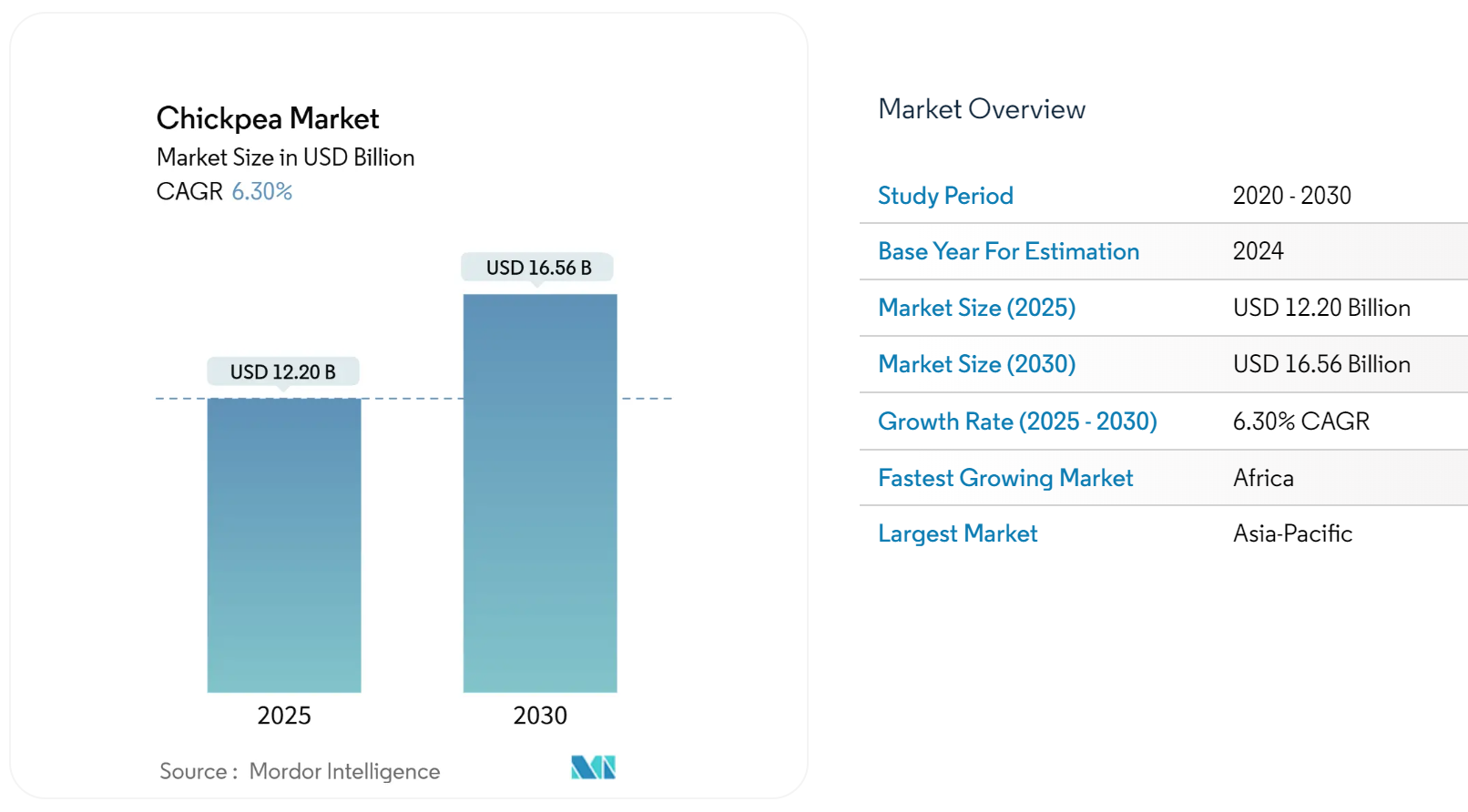
Chickpeas are increasingly viewed as a superfood, especially in Europe, North America, and East Asia. According to Mordor Intelligence (2024), the global chickpea market value exceeded USD 14.8 billion in 2023 and is projected to grow at a CAGR of 5.5% from 2024 to 2030.
Growth is driven by:
- Vegan and flexitarian diets fueling demand for plant-based protein.
- Gluten-free products like chickpea pasta, flour, and protein bars.
- Sustainability trends, as chickpeas enrich soil and require less water than other crops.
Chart 1: Global Chickpea Market Growth Forecast, 2023–2030” (Data: Mordor Intelligence, FAO)
Major Producers and Exporters
| Country | Production (2024, Mt) | Primary Export Markets |
|---|---|---|
| India | 10.5 | Middle East, Europe |
| Australia | 1.7 | South Asia, Middle East |
| Turkey | 0.7 | Europe, MENA |
| Myanmar | 0.5 | China, South Asia |
| Ethiopia | 0.4 | Middle East, EU |
Notably, Turkey and Ethiopia have become key exporters to Gulf markets due to proximity and consistent quality standards.
Emerging Markets: China and Japan
Although traditionally low consumers, China and Japan are seeing a surge in chickpea imports—especially for snack foods, tofu alternatives, and protein supplements. Chickpea flour and roasted snacks have entered mainstream retail channels, driven by health-conscious consumers and fitness trends.
Challenges and Market Outlook
Despite strong demand, the chickpea market faces:
However, technological improvements, improved seed varieties, and irrigation systems are expected to stabilize yields and strengthen trade reliability.
Conclusion
Chickpeas are evolving from a regional staple to a global health commodity. Middle Eastern consumption remains foundational, but expanding global markets are reshaping production and trade flows. With the world’s growing appetite for sustainable protein, chickpeas could become a strategic export crop—bridging nutrition, sustainability, and profitability for producers and traders alike.
Sources:
- Food and Agriculture Organization (FAO). FAOSTAT: Pulses – Chickpeas Production Data (2024)
- International Trade Centre (ITC). Trade Map: Global Chickpea Imports and Exports (2024)
- Mordor Intelligence. Global Chickpea Market – Growth, Trends, and Forecasts (2024–2030)
- World Bank. Food Security and Pulse Crops Outlook (2024)
- USDA Foreign Agricultural Service. Pulse Market and Trade Reports (2024)
By acting as a trusted intermediary, we help our supplier partners focus on what they do best—producing quality grain and food—while we take care of the rest.
If you a trusted bulk food and grain supplier? Connect with us today via our Contact page and join our exclusive supplier network, here.